GR-8
Key Features
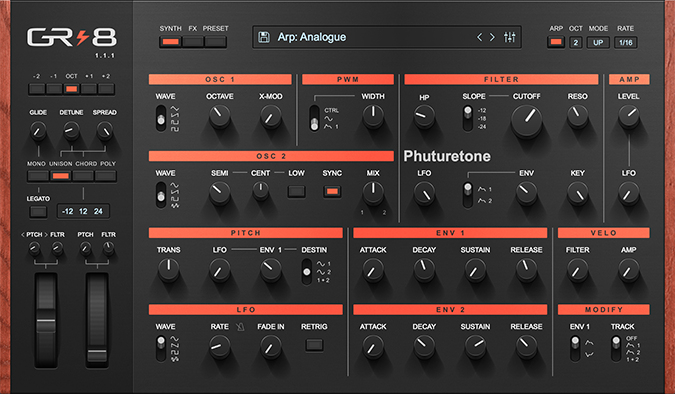
- Dual oscillators with 8 waveforms total, plus cross modulation, FM, pulse width modulation, and oscillator sync for complex timbres beyond basic subtractive synthesis
- Four voice modes — mono, 8-voice unison with detune and stereo spread, 4-note stereo chord, and 8-voice polyphony — covering everything from fat leads to wide pads
- Resonant low-pass filter with selectable 12, 18, or 24 dB/octave slopes and a non-resonant high-pass for precise tonal shaping across the frequency range
- Full effects chain built in: EQ, distortion, phaser, chorus/flanger, delay, and reverb, eliminating the need for external processing on most patches
- 5-mode arpeggiator (up, down, alt 1, alt 2, random) spanning 4 octaves for instant rhythmic patterns and melodic sequences
- 168 factory presets covering pads, leads, basses, keys, arps, and sound effects, with an active community producing additional preset banks
- Universal 2 Binary for native Apple Silicon performance, MIDI 2.0 support, and an optimized audio engine that reduced CPU usage in the latest update
Description
GR-8 is an 8-voice virtual analog synthesizer by Phuturetone that channels the warmth and character of classic 1980s Roland polysynths. Originally developed for the KVR Developer Challenge 2021, it has since grown into a community favorite with a 4.7 out of 5 rating on KVR Audio from 11 reviews.
The dual-oscillator architecture pairs triangle, sawtooth, pulse, and square waves on OSC 1 with sine, sawtooth, pulse, and noise on OSC 2. Cross modulation, FM, pulse width modulation, and oscillator sync give each voice tonal complexity well beyond basic subtractive synthesis.
Four voice modes cover mono, 8-voice unison with stereo spread and detune, 4-note stereo chord, and full 8-voice polyphony. Glide and legato controls add expressive pitch movement, while the resonant low-pass filter offers 12, 18, and 24 dB/octave slopes alongside a non-resonant high-pass.
A built-in effects chain includes EQ, distortion, phaser, chorus/flanger, delay, and reverb, so patches can be shaped without loading external plugins. The 5-mode arpeggiator covers up, down, two alternating patterns, and random across a 4-octave range.
Version 1.3.0 added 40 new presets bringing the total to 168, MIDI 2.0 support, high-resolution graphics, and an optimized audio engine for reduced CPU usage. It runs as VST3 and AU on macOS Catalina 10.15 or later, and VST3 on Windows 8.1 or higher with Universal 2 Binary support for Apple Silicon.
Video Preview


Frequently Asked Questions
What plugin formats does GR-8 support?
GR-8 is available as VST3 on both Windows and macOS, and as an Audio Unit (AU) on macOS. There is no VST2 or AAX version. The macOS build is a Universal 2 Binary that runs natively on both Intel and Apple Silicon processors.
Is GR-8 compatible with Apple Silicon Macs?
Yes. Since version 1.3.0, GR-8 ships as a Universal 2 Binary that runs natively on Apple Silicon (M1, M2, M3, M4) without Rosetta 2 translation. It also supports ARM64EC on Windows for emulation-compatible ARM devices.
How many presets does GR-8 include?
GR-8 ships with 168 factory presets covering pads, leads, basses, keys, arpeggiated patterns, and sound effects. Additional community preset banks are available from sound designers including Synthwave Dojo, Matthew B Carter, Cool WAV, and Sonic Sirus.
What is the best virtual analog synth plugin?
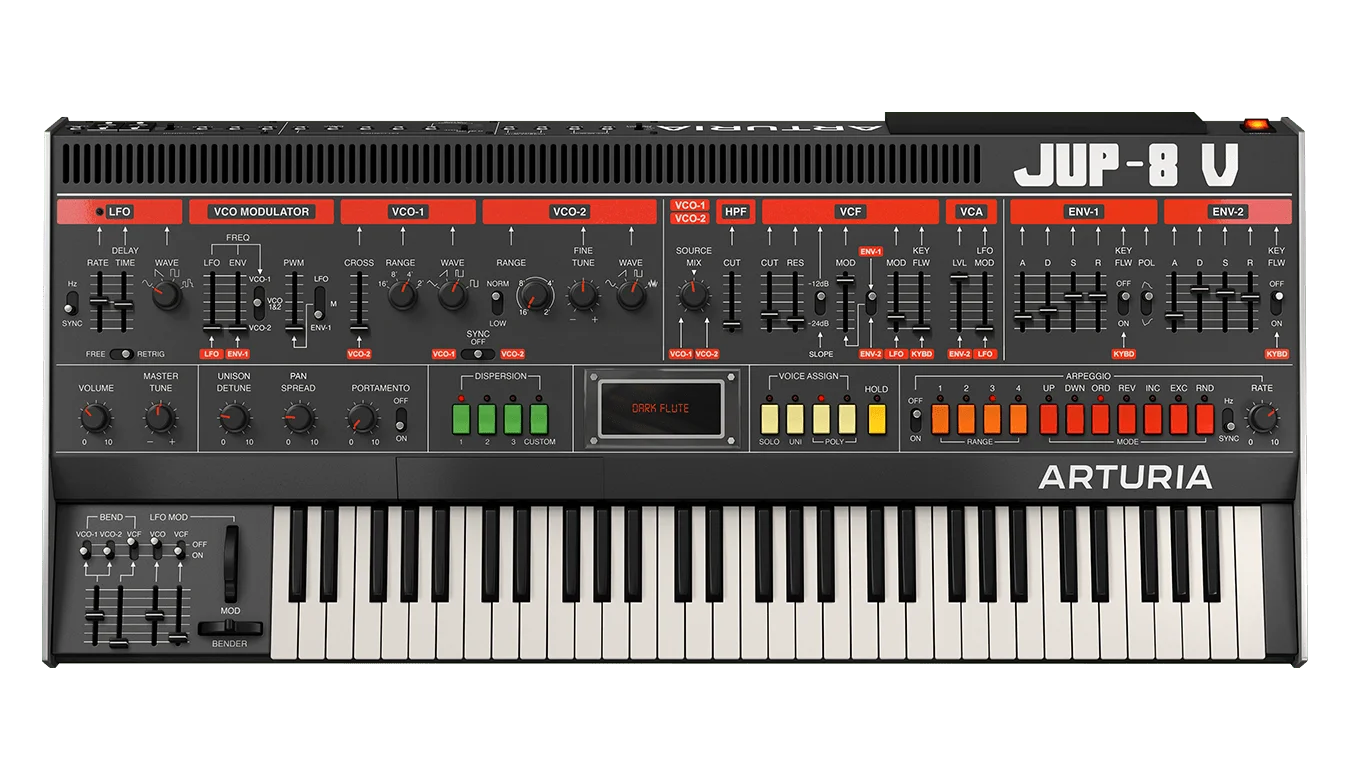
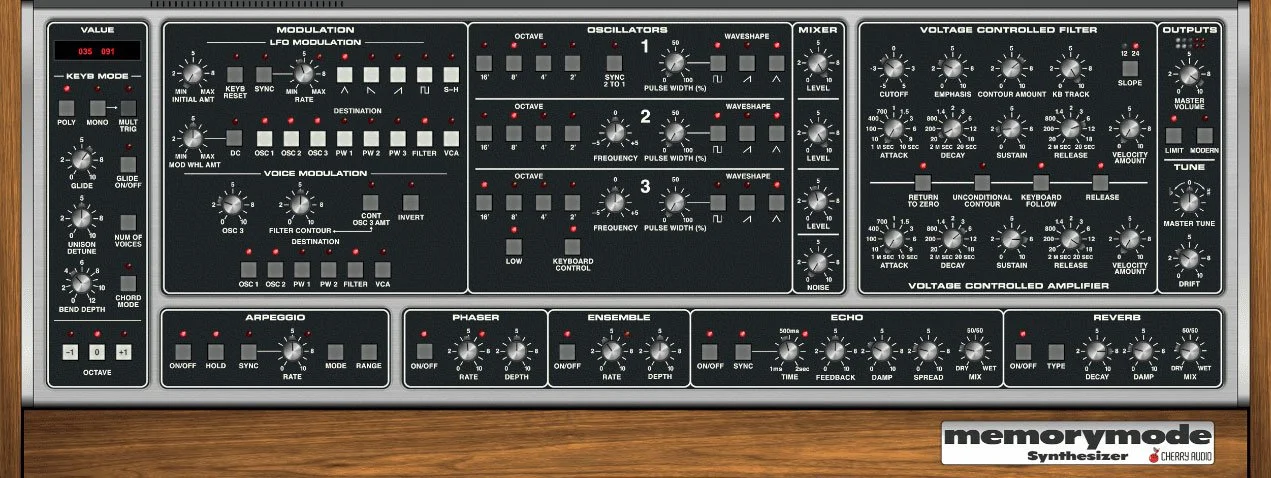
For a Roland Jupiter-style polysynth sound at no cost, GR-8 by Phuturetone delivers 8-voice polyphony with dual oscillators and built-in effects. Paid alternatives like Arturia Jup-8 V ($149) and TAL-J-8 ($149) offer more detailed component-level modeling of specific vintage hardware, while Cherry Audio Memorymode ($49) emulates the Memorymoog architecture.
Does GR-8 have an arpeggiator?
Yes. GR-8 includes a built-in arpeggiator with five modes: up, down, alternate 1, alternate 2, and random. It spans a 4-octave range and is available across all voice modes, making it useful for creating rhythmic sequences, cascading patterns, and melodic textures.