
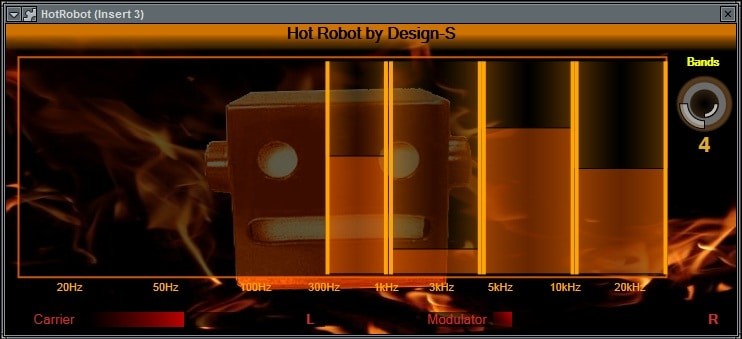
Hot Robot Vocoder
Key Features
- Interactive draggable frequency bands that can be repositioned and resized to shape the vocoder's frequency response in real time
- Adjustable band count from 4 to 40, allowing everything from thick robotic tones to highly intelligible vocoded speech
- Carrier and modulator architecture that blends vocal input with synthesized or external audio signals
- Included setup installer for quick, hassle-free installation without manual DLL placement
- Lightweight resource footprint requiring only 1 GHz CPU and 400 MB RAM for smooth operation
- Visual frequency band display that provides immediate feedback on how each band is mapped across the spectrum
Description
Hot Robot Vocoder by Design-S is a channel vocoder VST effect with a distinctive twist: fully interactive, draggable frequency bands. Unlike traditional vocoders that lock you into fixed band spacing, this plugin lets you grab each band and reposition or resize it to sculpt the vocoder's frequency response by hand.
The band count is adjustable from 4 to 40 via a single knob, giving you everything from thick, low-resolution robotic tones to highly articulate vocoded speech. Fewer bands produce a grittier, more synthetic sound, while higher band counts preserve more vocal intelligibility.
Design-S built the plugin in C# with a .NET 4.0 dependency, and it was originally entered in the KVR Developer Challenge 2012. The developer later channeled the lessons learned into a successor product, DSV-360, though Hot Robot remains available and functional.
HipHopMakers lists the plugin among their top 25 free vocoder recommendations, noting its easy-to-use interface and ability to add robotic flavor to productions quickly. The included setup package handles installation automatically, so there is no manual DLL copying required.
Hot Robot Vocoder runs as a 32-bit VST on Windows systems and requires .NET Framework 4.0. Minimum specs are a 1 GHz processor and 400 MB of available RAM.
Video Preview

Frequently Asked Questions
What is the best vocoder plugin?
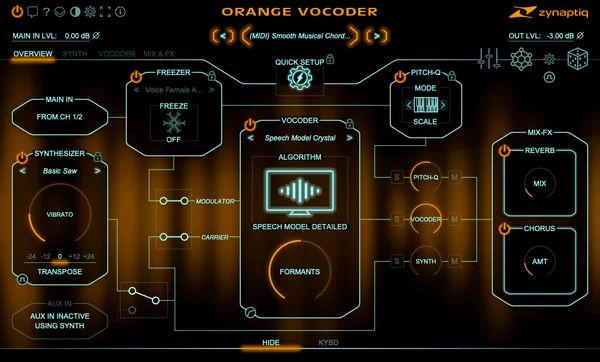
The best vocoder depends on your needs. Commercial options like Zynaptiq Orange Vocoder IV ($149) offer 24 vocoding algorithms and advanced pitch control, while Arturia Vocoder V ($149) recreates a classic hardware design. Hot Robot Vocoder stands out among free options because of its interactive draggable bands, which let you shape the frequency response visually rather than relying on fixed presets.
Is a vocoder the same as a robotic voice effect?
A vocoder is one way to create robotic voices, but it works differently from pitch correction or formant shifting. It splits a voice signal into frequency bands and uses those bands to modulate a carrier signal (usually a synth), producing the classic robotic or synthetic vocal texture heard in Daft Punk and Kraftwerk tracks.
Does Hot Robot Vocoder require .NET Framework?
Yes. Hot Robot Vocoder is written in C# and requires .NET Framework 4.0 to be installed on your system. Most Windows 7 and later installations include .NET 4.0 by default, but if the plugin fails to load in your DAW, installing .NET Framework 4.0 from Microsoft's website will resolve the issue.
How do you set up a vocoder in a DAW?
Load Hot Robot Vocoder as an insert effect on your vocal track, then route a synth or carrier signal to its sidechain input. The exact routing method varies by DAW. The vocoder imposes the vocal signal's frequency envelope onto the carrier tone, and you can drag the bands in Hot Robot's interface to fine-tune which frequencies are emphasized in the output.


