JS80P
Key Features
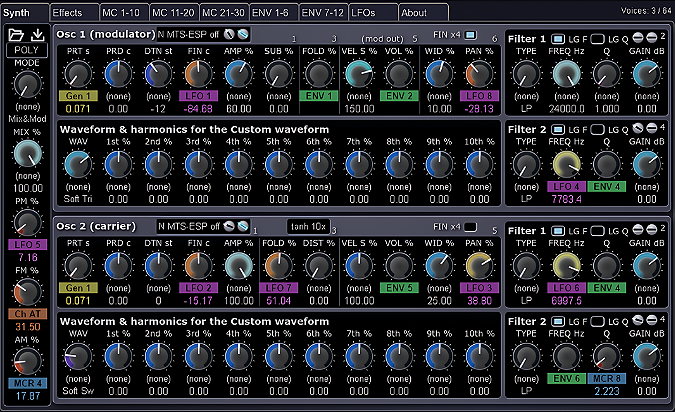
- Two oscillators with ten waveforms each plus sub-harmonic sine, supporting subtractive, additive, FM, PM, and AM synthesis with 64-note polyphony
- Seven filter types per oscillator (low-pass, high-pass, band-pass, notch, bell, low-shelf, high-shelf) with logarithmic cutoff scaling and analog-style inaccuracy
- Full MIDI Polyphonic Expression support with per-note pitch bend, pressure, and timbre control across configurable channel zones
- 12 DAHDSR envelopes and 8 LFOs with tempo sync, polyphonic capability, and multiple envelope shape curves for precise modulation
- 30 freely assignable macros with non-linear curve shaping, randomness, and midpoint adjustment for deep MIDI controller mapping
- Built-in effects: tape simulation (wow, flutter, hiss, saturation), multi-voice chorus, stereo echo with sidechain compression, and stereo reverb
- Analog imperfection emulation for oscillator pitch instability and filter cutoff drift, recreating the organic character of vintage hardware
Description
JS80P is a MIDI-driven, performance-oriented synthesizer inspired by the Yamaha CS-80, the iconic 1970s analog polysynth used by Vangelis, Stevie Wonder, and Michael McDonald. Developed by Attila Magyar as a free and open source project, it delivers two oscillators with ten waveforms each, a sub-harmonic sine, and support for FM, PM, and AM synthesis.
The synth engine provides 64-note polyphony with seven filter types per oscillator, 12 DAHDSR envelopes, and 8 LFOs with optional amplitude envelopes. Thirty freely assignable macros combine and transform MIDI controllers with non-linear curve shaping, giving deep expressive control over every parameter.
Version 3.5.0 adds full MIDI Polyphonic Expression support with per-note pitch bend, pressure, and timbre control. Analog imperfection emulation introduces pitch inaccuracy and instability to the oscillators and filter cutoff, recreating the organic drift of vintage hardware.
The built-in effects suite includes tape simulation with wow, flutter, and hiss, a multi-voice chorus with up to seven voices, stereo echo with reversible delay lines, and stereo reverb with room sizes from small to cathedral. Over 50 factory presets demonstrate the range from lush pads and brass to acid leads and dystopian textures.
JS80P supports VST3 and FST (VST 2.4 compatible) formats on Windows 7+ and Linux. Both AVX-optimized and SSE2 builds are available, with MTS-ESP microtuning support for alternative tuning systems.
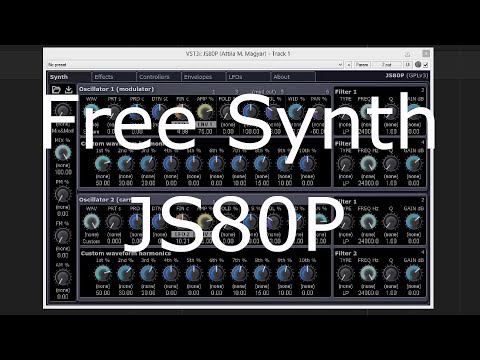
Video Preview

Frequently Asked Questions
Is JS80P compatible with macOS?
JS80P officially supports Windows 7+ and Linux (Ubuntu 22.04+). There is no official macOS build. However, the source code is available on GitHub under GPL v3, so it can potentially be compiled for macOS by developers comfortable building from source.
What plugin formats does JS80P support?
JS80P is available in VST3 (bundle and single-file editions) and FST (VST 2.4 compatible) formats. Both 64-bit and 32-bit versions are provided, with separate AVX-optimized and SSE2 builds for different CPU capabilities.
Does JS80P support MIDI Polyphonic Expression (MPE)?
Yes. Version 3.5.0 added full MPE support with per-note pitch bend, pressure, and timbre control. You can configure lower zone (channel 1 manager) or upper zone (channel 16 manager) with 1-15 member channels for expressive performance with MPE controllers.
How does JS80P compare to Arturia CS-80 V?
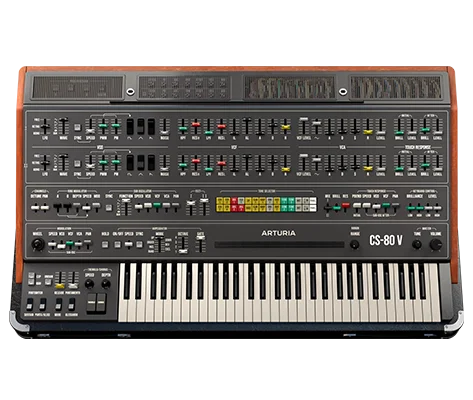
Both emulate the Yamaha CS-80 character. JS80P is free and open source with a more technical interface, 64-note polyphony, and 30 assignable macros. Arturia CS-80 V4 ($149) offers a photorealistic GUI, modulation matrix, advanced arpeggiator, and official macOS/AAX support. JS80P focuses on deep parameter control while Arturia prioritizes visual realism.
What are the system requirements for JS80P?
JS80P requires Windows 7 or newer, or Linux (Ubuntu 22.04+), with a CPU that supports SSE2 instructions. It uses approximately 200-300 MB of RAM per instance depending on buffer size and sample rate. A buffer size around 6 ms (256 samples at 44.1 kHz) is recommended.