Lisc-Verb
Key Features
- Three reverb modes (Normal, Freeze, and Gated) with adjustable size, width, damping, and gate amount for versatile spatial processing
- Tempo-syncable delay line with free or synced rate, adjustable offset, and feedback for rhythmic echo effects
- Dual state variable filters with low pass, high pass, band pass, and band reject modes at both the input and effect output stages
- Flexible signal routing lets you process the dry signal through a filter before the output or send it clean or filtered into the effect section
- Input filter LFO for automating filter sweeps and creating evolving, modulated textures without external tools
- Dedicated reverb/delay mix control plus wet/dry output mix and gain for precise effect blending
- Comprehensive preset manager with a large bank of starting points for ambient pads, rhythmic textures, and gated effects
Description
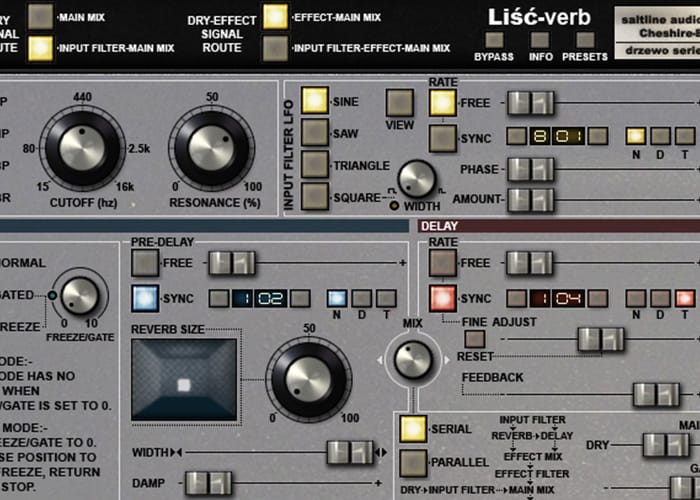
Lisc-Verb by Saltline is a multimode reverb and delay effect that brings texture, depth, and spatial character to any sound source. Built with SynthEdit, the plugin combines a reverb engine, tempo-syncable delay line, and dual state variable filters into a single cohesive signal chain.
The signal path offers genuine routing flexibility. The dry signal can pass through a state variable filter before the output, or be sent directly to the effect section either clean or filtered.
The reverb section provides three distinct modes: Normal for conventional spatial processing, Freeze for capturing and sustaining reverb tails indefinitely, and Gated for tight, punchy ambience. Each mode responds to adjustable size, width, and damping controls.
The integrated delay can run in free or tempo-synced mode with adjustable rate, offset, and feedback. A dedicated reverb/delay mix control lets you blend both effects precisely before they pass through a second state variable filter for final tonal shaping.
All four filter types (low pass, high pass, band pass, and band reject) are available at both filter stages, each with frequency cutoff and resonance controls. An input filter LFO adds modulation possibilities that make automated sweeps and evolving textures easy to achieve.
The interface is densely packed with sliders and knobs, which gives experienced producers deep control but does create a learning curve. Automating the filter cutoff, delay rate, or reverb width transforms static effects into dynamic, evolving soundscapes.
Video Preview

Frequently Asked Questions
Does Lisc-Verb work on macOS or 64-bit systems?
Lisc-Verb is a 32-bit Windows-only VST plugin. To use it on a 64-bit DAW, you need a bridging tool like jBridge, which the developer recommends on their website. There is no native macOS version.
Can Lisc-Verb sync its delay to the host tempo?
Yes. The delay section offers both free-running and tempo-synced rate modes. In synced mode, the delay locks to your DAW's BPM, and you can fine-tune the timing with the rate adjust and delay offset controls.
What does the Freeze reverb mode do?
Freeze mode captures and sustains the current reverb tail indefinitely, creating an infinite pad-like wash from any input signal. It is useful for ambient sound design, drone textures, and creating sustained beds from short source material.
How do the two filter stages work in the signal chain?
The first filter processes the dry signal before it enters the effect section, letting you shape what the reverb and delay receive. The second filter sits after the reverb/delay output, allowing you to shape the wet signal's tone before it reaches the final mix.