
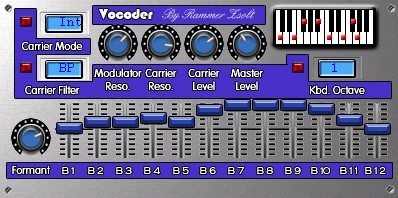
RZS Vocoder
Key Features
- 12-band vocoder engine with individual gain control per frequency band for detailed spectral shaping
- Built-in carrier oscillator eliminates the need to route a separate synthesizer track as the carrier signal
- Band shift parameter moves the entire filter bank up or down in frequency for tonal variation from deep bass to bright metallic textures
- Separate modulator and carrier input level controls for precise balance between the voice and synth signals
- Dry/wet mix control for blending vocoded output with the original signal to retain vocal intelligibility
- Lightweight footprint at just 0.59 MB with minimal CPU usage, suitable for older systems and large sessions
Description
RZS Vocoder is a 12-band vocoder effect by Rammer Zsolt that splits an incoming audio signal into twelve frequency bands, applies envelope following to each, and uses those envelopes to shape a carrier signal. The result is the classic robotic vocal tone heard in electronic music from Kraftwerk to Daft Punk.
The plugin provides separate input level controls for both the modulator (typically a voice) and the carrier (typically a synth), along with a built-in oscillator so you can generate carrier tones internally without routing a second track. Each of the twelve filter bands has individual gain control, letting you sculpt which frequency regions pass through the vocoding process.
A band shift parameter moves the entire filter bank up or down in frequency, producing anything from deep robotic bass to bright, metallic textures. The interface also includes an output mix control for blending processed and dry signals, which is useful for retaining vocal clarity while adding vocoder character.
RZS Vocoder is a Windows-only 32-bit VST plugin weighing just 0.59 MB. It runs in any DAW that supports VST on Windows, though 64-bit users will need a bridge like jBridge or the 32-bit version of their DAW.
Video Preview


Frequently Asked Questions
What is the best VST vocoder?
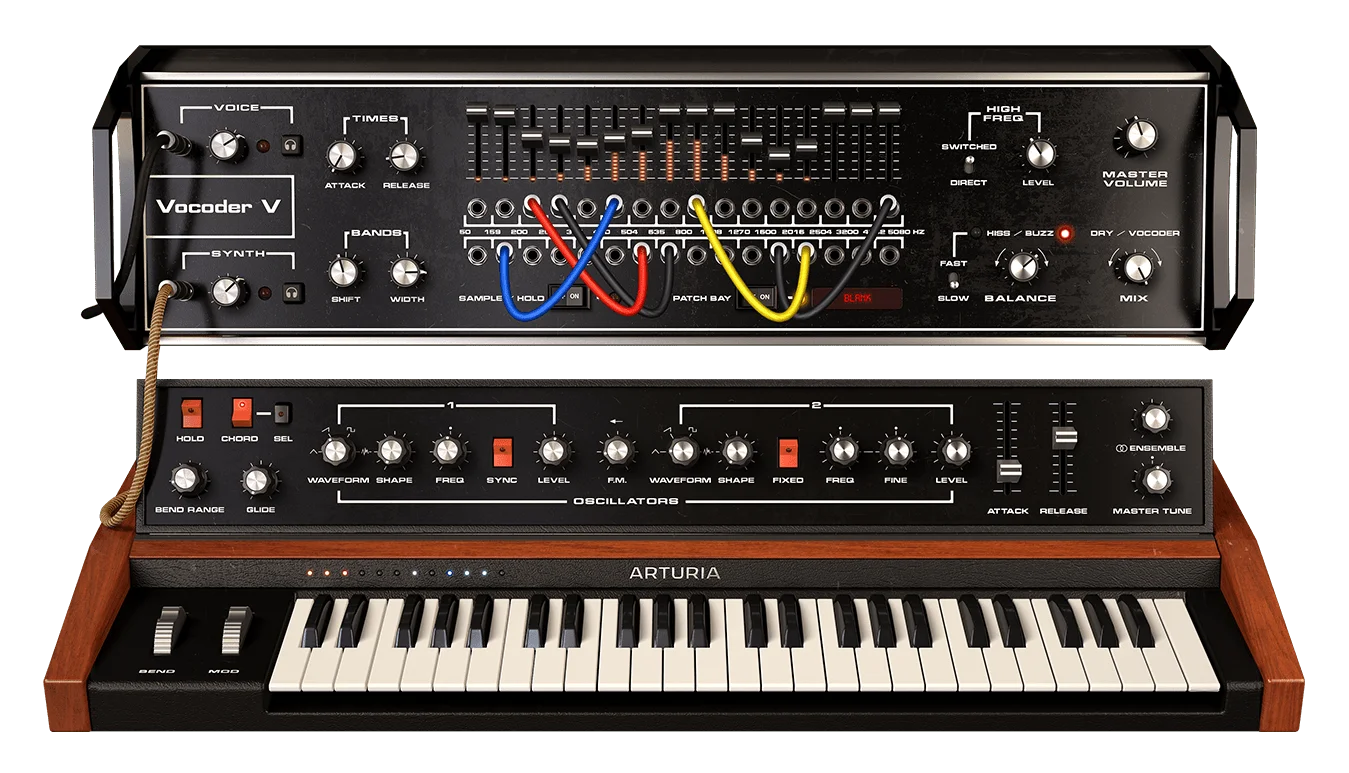
The best vocoder depends on your needs and budget. For professional studios, Arturia Vocoder V and Waldorf Lector offer extensive controls and high band counts. Among free options, TAL-Vocoder is the most popular with its 11-band engine and vintage 80s character. RZS Vocoder provides a capable 12-band engine with a built-in carrier oscillator at zero cost.
Is a vocoder the same as a talk box?
No. A vocoder analyzes the spectral shape of one signal (the modulator, usually a voice) and applies it to another signal (the carrier, usually a synth) using filter banks. A talk box physically routes amplified sound through a tube into the performer's mouth, where they shape it with their lips and tongue. Vocoders work entirely in the digital or electronic domain, while talk boxes require physical interaction.
How do I use RZS Vocoder with a 64-bit DAW?
RZS Vocoder is a 32-bit VST plugin, so it cannot load natively in 64-bit DAWs. You can use a VST bridge like jBridge (Windows) to wrap the 32-bit DLL for use in a 64-bit host. Alternatively, some DAWs like Reaper have built-in bridging that handles 32-bit plugins automatically.
What carrier signal should I use with a vocoder?
Harmonically rich waveforms like sawtooth or pulse waves work best because they contain the full frequency spectrum a vocoder needs to reconstruct intelligible speech. RZS Vocoder includes a built-in oscillator for this purpose. You can also route external synth pads, strings, or chord progressions as the carrier for more musical results.


