
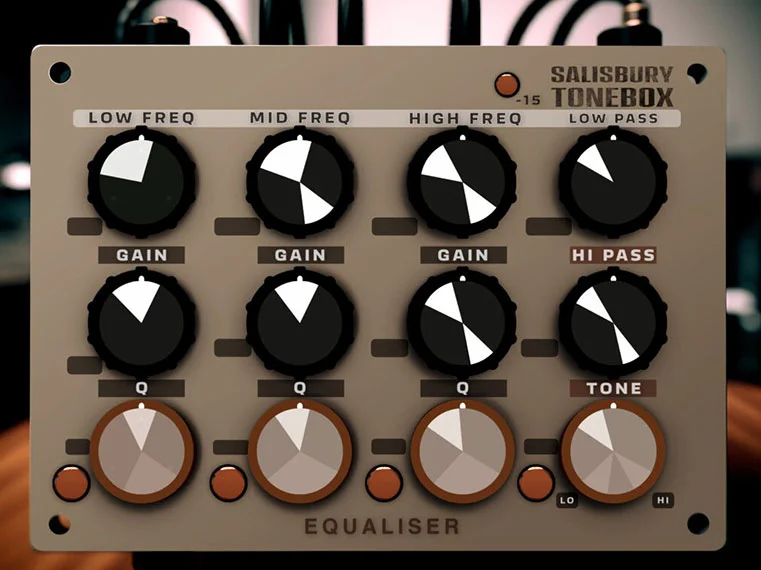
Tonebox

Key Features
- Dual mono non-linear input amplifier emulation delivering tube-style saturation from subtle warmth to aggressive overdrive
- Tilt tone control that shifts the entire frequency balance in a single move for quick tonal rebalancing
- Three-band fully parametric EQ with adjustable frequency, gain, and Q for precise tone sculpting
- High-pass and low-pass filters for cleaning up low-end rumble and taming harsh high frequencies
- Gain stage button providing -15 dB additional headroom for flexible gain staging before the saturation stage
- 64-bit internal processing precision with HiDPI and Retina display support for crisp rendering on high-resolution screens
Description
Tonebox by Salisbury Plugins is a saturation and tone-shaping plugin that pairs non-linear amplifier emulation with a 3-band parametric EQ and tilt control. The saturation stage models a dual mono tube amplifier, adding harmonic warmth that ranges from subtle coloring to gritty overdrive depending on how hard you drive the input.
The tilt control shifts the entire tonal balance in one move — tilt left to darken, tilt right to brighten. Combined with the three fully parametric EQ bands and adjustable high-pass and low-pass filters, it covers both broad tonal shaping and precise frequency correction in a single plugin instance.
Bedroom Producers Blog praised the smooth saturation character and the workflow benefit of combining saturation and EQ: "If my EQ can saturate the signal, too, count me in. As long as it sounds good and speeds up my workflow, I'm all for it." The tilt EQ was singled out as especially useful for quick tonal rebalancing.
A gain stage button provides -15 dB of additional headroom for gain staging flexibility, and the plugin runs at 64-bit internal precision. HiDPI and Retina displays are supported for sharp rendering on high-resolution screens.
Version 1.0 improved the UI, fixed gain spikes caused by sudden gain changes, and added more accurate latency reporting. Both 32-bit and 64-bit binaries are included for Windows, while macOS gets a 64-bit build with experimental AU support alongside VST3.
Video Preview


Frequently Asked Questions
What plugin formats does Tonebox support?
Tonebox is available as a VST3 plugin on both Windows and macOS. An AU (Audio Unit) version is also included for macOS, though it is marked as experimental by the developer. Both 32-bit and 64-bit binaries are provided for Windows.
What is a tilt EQ and how does Tonebox use it?
A tilt EQ is a single-knob equalizer that simultaneously boosts highs while cutting lows (or vice versa) around a center frequency. Tonebox uses its tilt control to let you shift the entire tonal balance of a signal in one quick move, making it faster than adjusting individual EQ bands for broad tonal changes.
Can Tonebox be used for subtle saturation or only heavy distortion?
Tonebox covers the full range from subtle to aggressive. At lower input levels the saturation adds gentle harmonic warmth and analog character, while pushing the input harder produces grittier overdrive and distortion. The gain stage button adds -15 dB of headroom for more control over the saturation intensity.
Is Tonebox compatible with Apple Silicon Macs?
The developer lists macOS 10.9 or later as a requirement. The macOS build includes a 64-bit VST3 and experimental AU. Users on Apple Silicon Macs can run it through Rosetta 2 if a native ARM build is not explicitly provided.
How does Tonebox compare to paid saturation plugins like Soundtoys Decapitator?
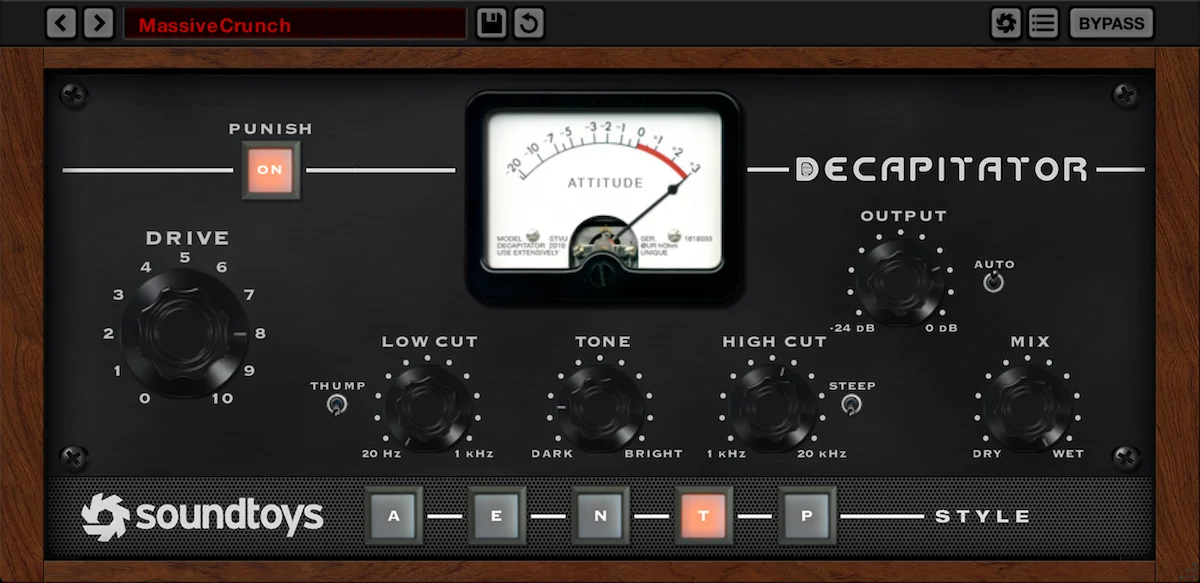
Decapitator offers five analog saturation models and more extensive tone-shaping controls at $199. Tonebox provides a single saturation engine paired with a built-in tilt EQ and 3-band parametric EQ, making it a more streamlined tool that combines saturation and equalization in one interface at no cost.


