Ultramaster KR-106
Key Features
- Two calibration modes: 1984 Mode (firmware/schematics) and 1982 Mode (circuit analysis/hardware measurements) for different tonal characteristics
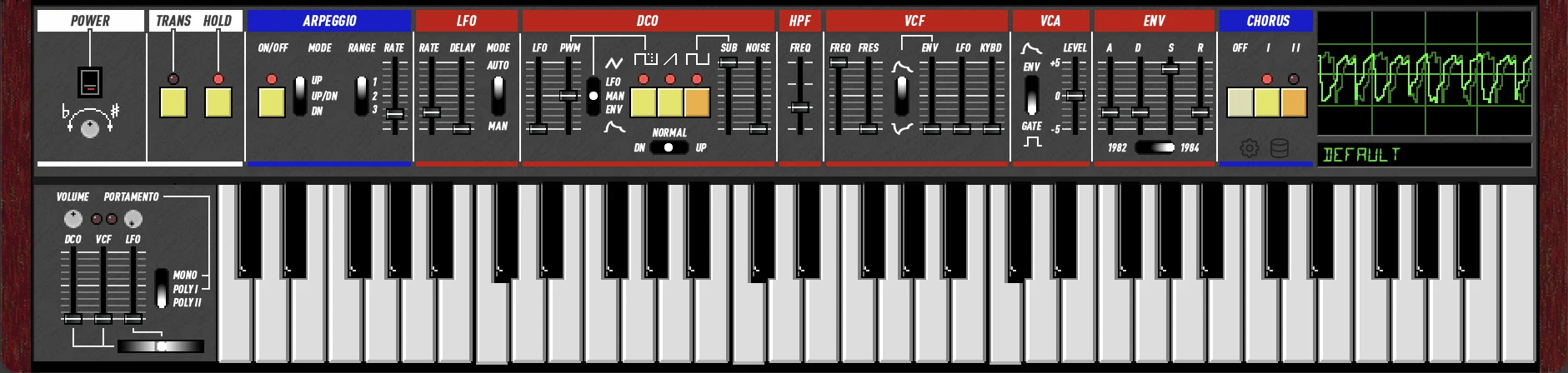
- 6-voice polyphonic with per-voice DCO, VCF, VCA, and ADSR envelope, plus shared LFO, high-pass filter, chorus, and arpeggiator
- IR3109 4-pole TPT OTA cascade filter with resonance self-oscillation, 2x oversampled for clean sound at high resonance
- MN3009 bucket-brigade chorus modeled with Hermite interpolation and charge-well saturation for authentic analog character
- 128 factory presets decoded from original SYSEX data, not hand-tweaked — faithful to the hardware
- Per-voice analog variance modeling of component tolerances in pitch, envelope timing, VCA gain, and pulse width
- Built-in oscilloscope and filter/ADSR visualizers for real-time feedback on sound shaping
Description
Ultramaster KR-106 is a free, open-source virtual analog synthesizer inspired by the Roland Juno-106. Built by two developers who started the project in a Brooklyn loft in the year 2000, it delivers a 6-voice polyphonic architecture with DSP calibrated from hardware measurements, firmware analysis, and original factory schematics.
The synth offers two distinct calibration modes. 1984 Mode tunes every parameter from firmware analysis and factory schematics, while 1982 Mode models the analog CV path from circuit analysis and hardware measurements.
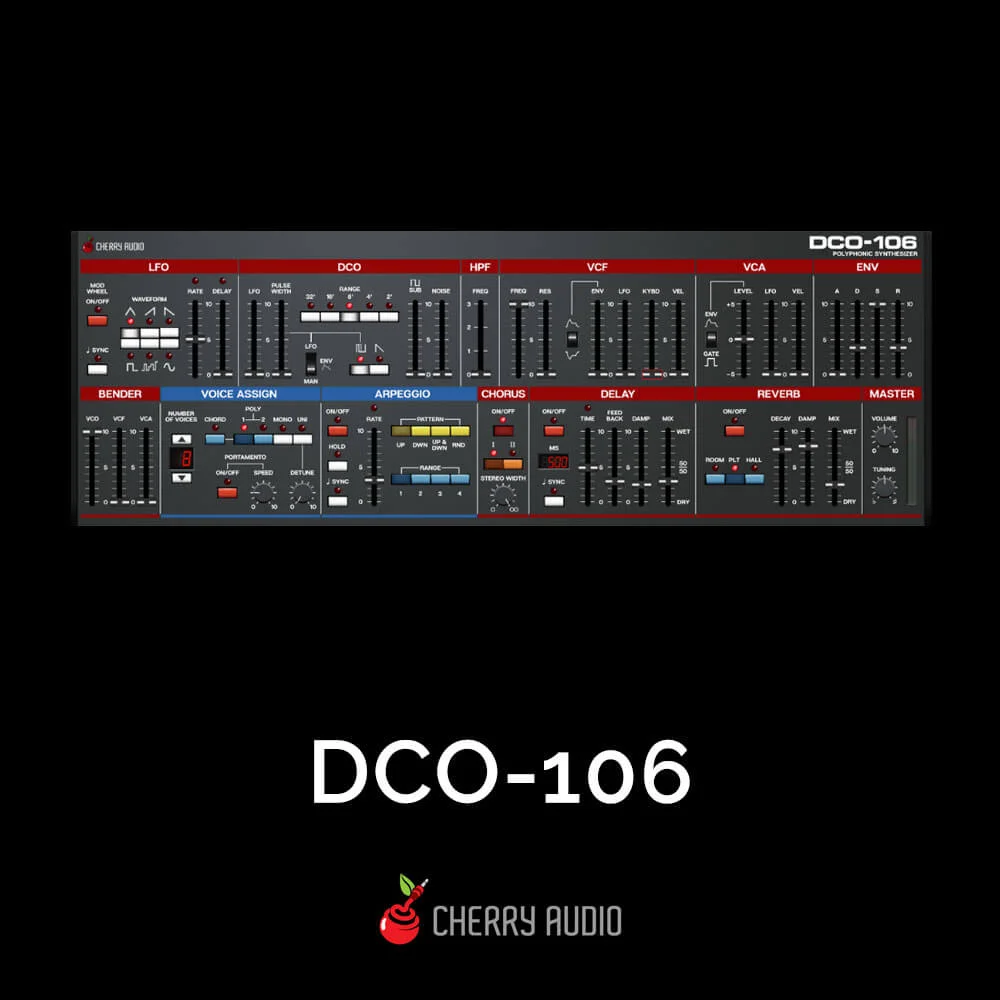
Each voice has its own DCO, VCF, VCA, and ADSR envelope. The shared section includes an LFO, high-pass filter, chorus, and arpeggiator.
Mono, Poly I, and Poly II key modes are available with portamento.
The IR3109 filter is a 4-pole TPT OTA cascade with expo converter saturation and resonance self-oscillation, running at 2x oversampling. The MN3009 bucket-brigade chorus uses Hermite interpolation, charge-well saturation, and a modulated bandwidth filter.
All 128 factory presets are decoded directly from original SYSEX data. The analog variance engine models per-voice component tolerances in pitch, envelope timing, VCA gain, and pulse width.
The interface includes an oscilloscope and visualizers for the filter and ADSR envelope.
Video Preview


Frequently Asked Questions
Is Ultramaster KR-106 really free?
Yes. KR-106 is 100% free and open source under the GPL license. The developers do not accept donations. They suggest supporting Kayrock Screenprinting or JDRF (Type I diabetes research) instead.
What is the difference between 1982 Mode and 1984 Mode?
1984 Mode calibrates all parameters from firmware analysis and factory schematics, closely matching the digital control behavior of the original hardware. 1982 Mode models the analog CV path from circuit analysis and hardware measurements, capturing the earlier analog control characteristics.
What plugin formats does Ultramaster KR-106 support?
KR-106 is available as AU, VST3, CLAP, LV2, and standalone. It runs on macOS (Intel and Apple Silicon), Windows (64-bit), and Linux (x86 and ARM64).
How accurate is the KR-106 compared to a real Juno-106?
The developers calibrated the DSP from hardware measurements, firmware analysis, and original factory schematics. All 128 factory presets are decoded from original SYSEX data. However, the developers describe it as a work in progress and welcome bug reports via GitHub.
Can I modify the source code?
Yes. KR-106 is open source and hosted on GitHub at github.com/kayrockscreenprinting/ultramaster_kr106. Contributions and bug reports are welcome.